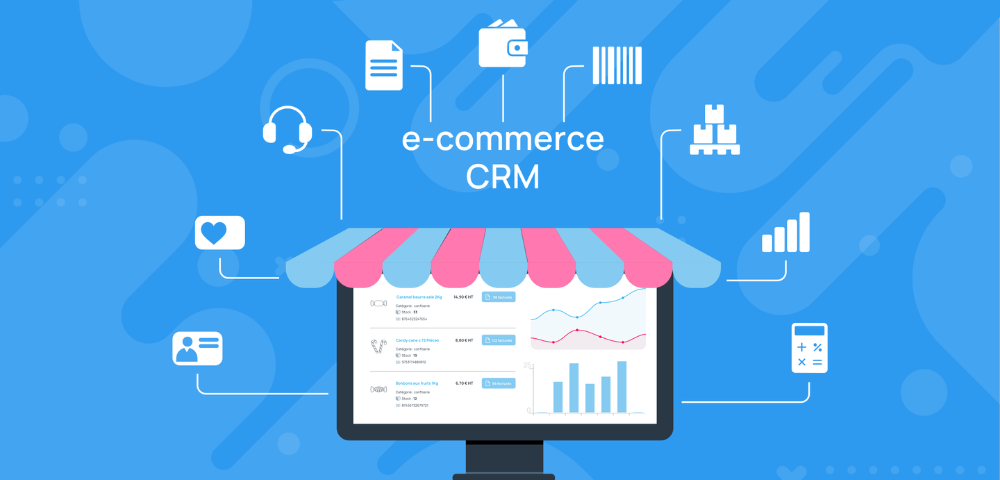
In today’s fast-paced digital landscape, ecommerce businesses face growing pressure to deliver seamless customer experiences while managing operations efficiently. One of the most powerful ways to achieve this is through integrating your ecommerce platform with a Customer Relationship Management (CRM) system.
What is Ecommerce-CRM Integration?
Ecommerce-CRM integration refers to the process of connecting your online store (like Shopify, WooCommerce, Magento, etc.) with a CRM system (such as Salesforce, HubSpot, or Zoho CRM). This connection enables the automatic transfer of customer data, order history, and communication logs between the two systems.
Benefits of Ecommerce and CRM Integration
1. Centralized Customer Data
When your ecommerce store is integrated with a CRM, customer information is automatically synced in one place. This includes names, emails, purchase history, browsing behavior, and preferences. With this unified data, sales and support teams can better understand and serve customers without toggling between platforms.
2. Improved Customer Experience
Customers expect personalized experiences. By using CRM data like previous orders or abandoned carts, businesses can send tailored promotions, follow-ups, and product recommendations. This personalization builds trust and loyalty, encouraging repeat purchases.
3. Efficient Marketing Automation
With an integrated system, you can launch targeted email campaigns based on customer behavior. For example, a customer who bought a camera can be sent accessories as cross-sell offers. CRMs like HubSpot or ActiveCampaign allow ecommerce businesses to automate these workflows and monitor performance easily.
4. Enhanced Sales and Support Processes
Sales reps get full visibility into customer activity—what they’ve bought, how often they shop, and how they interact with your site. This helps in crafting relevant upsell or re-engagement strategies. Similarly, support teams can resolve issues faster by accessing a customer’s purchase and communication history directly from the CRM.
5. Data-Driven Decision Making
With ecommerce data flowing into your CRM, you can generate insightful reports on customer lifetime value, conversion rates, or cart abandonment trends. These insights enable smarter decision-making regarding inventory, marketing spend, and customer retention strategies.
Popular Tools for Integration
Several tools and platforms make ecommerce-CRM integration easy:
-
Crmrunner offer low-code integration between most major platforms.
In a world where customer experience defines brand loyalty, integrating your ecommerce platform with a CRM isn’t a luxury—it’s a necessity. It bridges the gap between sales, marketing, and support, enabling your business to operate smarter, serve better, and grow faster.
If you’re not leveraging ecommerce-CRM integration yet, now is the time to explore the right tools and set your business up for long-term success.

0 Comments