
In today’s competitive business environment, organizations are constantly looking for ways to streamline their internal processes while improving external interactions. Traditionally, Human Resource (HR) systems and Customer Relationship Management (CRM) platforms have served two distinct purposes. HR software focused on managing internal employee data, payroll, recruitment, and performance, while CRM systems were dedicated to tracking customer interactions and sales pipelines. However, the lines between these two functions are increasingly blurring, giving rise to integrated HR Software CRMs.
What is HR Software CRM?
HR Software CRM is a hybrid system that combines the functionality of traditional HR management tools with CRM features. This integration allows businesses to manage both employee and client relationships from a single platform. Such systems are especially useful for service-based industries, recruitment agencies, consulting firms, and any business where employees are closely involved in client interactions.
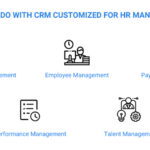
Key Features
-
Employee and Client Database Integration
Instead of juggling separate systems, businesses can manage employee profiles and client contacts in one platform. This improves efficiency and reduces data redundancy. -
Recruitment and Onboarding
Integrated platforms can streamline recruitment by tracking candidates, managing interviews, and converting new hires into employee profiles while maintaining alignment with client project requirements. -
Performance Tracking and Feedback
When employees are client-facing, it’s helpful to track their performance in relation to customer satisfaction. HR CRM systems can link employee KPIs to client feedback, offering a holistic view of performance. -
Scheduling and Project Management
Businesses can assign employees to client projects, track hours, and manage deadlines, all within the same tool. This is especially useful for consulting and outsourcing firms. -
Communication Logs and Notes
Centralized notes and communication histories make it easy for HR and management to understand how employees interact with clients, improving transparency and accountability.
Benefits of Using HR Software CRM
-
Improved Collaboration: By bridging HR and CRM, teams can collaborate more effectively, ensuring that the right employees are matched with the right clients or projects.
-
Enhanced Reporting: Unified reporting tools provide deeper insights into employee productivity and client satisfaction, allowing for data-driven decisions.
-
Time and Cost Efficiency: Managing one integrated platform reduces the need for multiple tools, lowering software costs and training time.
-
Better Compliance and Record-Keeping: With everything in one place, it’s easier to maintain accurate records for audits, legal compliance, and performance evaluations.
Who Should Use HR Software CRM?
This type of software is ideal for small to mid-sized businesses that need both HR and client management capabilities but don’t want to invest in two separate systems. Recruitment agencies, consulting firms, IT service providers, and creative agencies can particularly benefit from the synergy this integration offers.
The evolution of HR Software CRM reflects a broader trend toward integrated digital solutions. As the workplace becomes more dynamic and client-focused, having a system that manages both people and relationships is not just a convenience—it’s a strategic advantage. Investing in an HR CRM platform can help businesses stay agile, efficient, and aligned across teams.

0 Comments